Friday, 11 March 2011

Jonathan Jones on grief and public art in The Guardian

http://www.guardian.co.uk/artanddesign/jonathanjonesblog/2011/mar/10/9-11-sculpture-public-art-miya-ando

How much bearing should private grief have on public art?

Opposition to Miya Ando's Thameside 9/11 sculpture is understandable, but civic monuments have a wider import
World Trade Center

Would a proposed Thameside sculpture made of steel girders taken from the debris of the twin towers offer a focal point for reflection? Photograph: Peter Morgan/Reuters
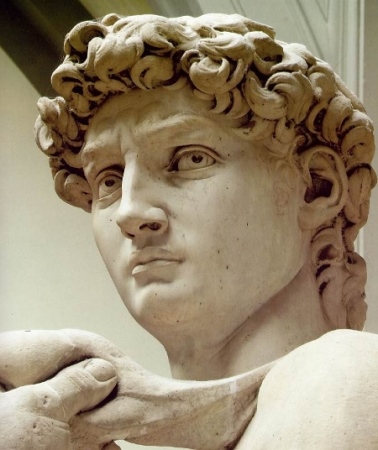
In May 1504, a colossal statue carved by the young Michelangelo was moved through the streets of Florence towards its chosen site in the political centre of the city. Mysterious assailants, perhaps supporters of the then-exiled Medici family, threw stones at it under cover of darkness. Public art has been controversial ever since David was stoned.
When a work of art is exhibited in a space defined as "public" rather than "private", its meanings change; it can assume a new kind of power or suffer a new kind of disgrace. Over time, it tends to become part of the local scenery – a generalisation to which David is an obvious exception. But when an artwork is new it can generate controversy that seems inexplicably intense, sometimes tearing down the barrier between fine art and real-life emotions.
There is such a dispute about a planned monument in London to the victims of the terrorist attacks on the World Trade Centre. The 9/11 monument designed by Miya Ando has been deferred after objections by British relatives of people who died in the attack and the September 11 UK families support group. Their discomfort apparently arises from the plan to use surviving steel girders from the wreckage of that dreadful day and present them in what has been called a provocatively "raw" way.
No one would want to lightly dismiss the feelings of these families, but is the monument exclusively for them? It seems a misunderstanding of public art to place decisive emphasis on the private feelings of one group, however potent their victimhood. Anyone who was personally afflicted by that atrocity is sentenced to a life of remembrance, just as no one who lost a son or brother in the first world war needed the Cenotaph to remind them of their pain. The Cenotaph is also a raw, bleak object, but we are glad it is there, pleased that poppies are worn and a silence held to remember the war. Monuments are not just for us but for the future, keeping history alive in the minds of generations as yet unborn.
Memory is never neutral. It is savagely political: tell me what you remember and I will tell you what side you are on. The memory of the terror attacks on America is particularly contested. It has arguably led to a cycle of further destruction – "the wars of 9/11" – while conspiracy theorists have tried to eat away at the facts of what happened that day. But it would be absurd to deny the severity of the event, the human cruelty and loss those twisted girders record, or the need to create a world in which such horrors are never again perpetrated.
Truly cataclysmic historical events exert a macabre charisma that can make their memory seem toxic or burdensome. Yet we can never take a sense of history for granted, and the facts need restating constantly. Historians sometimes complain that young people leave school with far more knowledge of the Holocaust than any other historical event – but can we really say there is too much Holocaust history taught in schools? It seems there can never be enough to educate some people.
Nor can it be a good thing to forget 9/11 or treat it as a private matter for the people directly affected. It has shaped our time and we are not out of its shadow. A striking artistic memorial in London would be a focal point for discussion and analysis, for school groups and for anyone wanting to reflect. This memory is, as a contemporary said of David in 1504, "a public thing", and the public would benefit from a permanent place to confront it in London.

Sustainable Practice in Public Art seminar, 15th April, Manchester

Chrysalis Arts in collaboration with MIRIAD at MMU present a seminar about how artists and commissioners can begin to address the ecological and sustainability issues associated with climate change through their professional practice.

Inspirational speakers - PASA case studies - Group discussions

Seminar - April 15th - 10am to 4.30pm
Manchester Metropolitan University
Sandra Burslem Building  SB 2.10
Information & programme: www.pasaguidelines.org
Bookings: email chrysalis@artdepot.org.uk  or tel 01756 749222
Directions: www.mmu.ac.uk/travel/allsaints

MMU staff and students - free
Freelance practitioners £12
Organisations £30

Supported by MMU, MIRIAD, Chrysalis Arts Development, Arts Council England, Lottery Funded

Monday, 7 March 2011

Broomfield Hospital public art programme causes controversy

Some links to articles about the £400k public art programme at Broomfield Hospital in Essex....

A little film:
http://www.bbc.co.uk/news/uk-england-11454376 

It even made the Daily Mail! Under the headline '
Hospital splashes out £421k on 'modern art' – while trying to slash £40m from its budget'
http://www.dailymail.co.uk/news/article-1316772/Essex-hospital-splashes-421k-modern-art-trying-slash-budget.html

Evening Standard
http://www.thisislondon.co.uk/standard/article-23884134-hospital-facing-pound-40m-cuts-buys-art-for-pound-421000.do


Dare I mention the Per Cent for Art programme and that, for a £148m build programme, they should have spent more than three times as much? Also  no separation is recognised between the capital and revenue funding......never mind though, eh, art is always an easy target. Whether any of it is any good is another question.

Liverpool Discovers - temporary public art programme til 20th March 2011

Carolyn Murray has asked me to highlight 'Liverpool Discovers' (14 Feb - 20 March 2011) a city-wide temporary public art trail featuring 12 interactive artworks revealing little known facts about the city. Artists include David Kemp, Andy Plant, Andy Hazell, Carrie Reichardt, and Joe Rush. Jointly commissioned by Wild in Art and Liverpool Lantern Company.

For more details visit the website at:  www.liverpooldiscovers.co.uk

More info about the Faith Bebbington project here:

Runnercommission.blogspot.com 

Wednesday, 16 February 2011

CABE to merge with Design Council from 1 April 2011


CABE, the Commission for Architecture and the Built Environment is due to merge with the Design Council in April. It's not clear yet what they will be called...CABED maybe?!


The new organisation will 'speak with one voice to support a broad spectrum of design, architecture and public space. It will be government’s advisor on design in business innovation and the built environment....


The organisation will have a particular focus on achieving good design at a local level. The chair of CABE, Paul Finch, said it will place architecture ‘at the heart of the economy as a driver for competitive businesses and places’.
CABE’s design review service, which provides expert advice to councils, developers and communities through reviews of major proposed projects, will continue at a national and local level. Promotion of the value of good building and spatial design to businesses and communities will continue. There will be a strong focus on securing good design in neighbourhood planning.
The Design Council name and status as a Royal Charter charity will be unaffected, and it will cease to be a non-departmental public body (NDPB) from 1 April.
The merger will save public money and provide scope for additional industry investment. The Design Council will continue to be financed through a combination of sources, including grants from the Department for Business Innovation and Skills (BIS) and the Department for Communities and Local Government (DCLG), confirmed until April 2013.
The new organisational structure for the Design Council and roles for CABE staff will be confirmed once staff consultations have been completed.
Some background to the merger: The government’s Comprehensive Spending Review (CSR) in October 2010 saw massive reductions across the public sector. Although CABE had passed the Public Bodies Review, it was unable to continue as a stand-alone organisation following unexpected withdrawal of funding by the Department of Culture. The Design Council had also had a tough time in the CSR, and the two chief executives concluded that joining the two organisations could create one that was stronger as well as providing a single voice for design and the built environment. The decision to go ahead with the merger was taken by government.'


To read the press release visit this link:
http://www.cabe.org.uk/news/cabe-and-design-council-merger

Monday, 14 February 2011

London's largest public art poem to be restored

In 2001 poet and art critic Sue Hubbard was commissioned by the Arts Council and the British Film Institute to write a poem for the underpass between Victory Arch at Waterloo Station and the IMAX cinema. In Autumn 2010 Time Out magazine listed it as one of the best 'secret' things to look out for in London - two weeks later the poem was inadvertently painted over during a 'clean up'.


The poem, 'Eurydice', is now being restored, thanks to a Facebook campaign which raised £1,000 and a company called Neural Technologies who have funded the remainder of the restoration costs.


The following article is taken from a press release on Neural Technologies' website:
'Ten years ago, as part of the renovation of the South Bank undertaken by Avery Architects, 
the Arts Council and the BFI commissioned Sue Hubbard to write a poem for the underpass 
between Victory Arch and the IMAX cinema.

Written in a series of three-lined stepped stanzas the poem was set out so that it could 

be read whilst walking through the tunnel. Using the metaphor of Eurydice descending 
into the underworld it aimed to make walkers feel safe. As well as the classical myth, 
the poem's imagery makes reference to London's Thameside history and to the famous 
Waterloo clock, a meeting point in so many British films.


As an example of innovative public art it has been written about in architectural journals 
and was the subject of a commissioned essay from Sue Hubbard by The Poetry Society, 
Opening Spaces, written during her residency as The Poetry Society's only Public Art Poet. 
It formed the back drop to a National Film School production will you forget me? (Stephen 
Bennet) and Lifelines, a Channel 4 drama produced by Carnival films. The poem has also 
been requested on Radio 4's Poetry Please.

Last autumn Time Out listed it as one of the best "secret" things to look out for in 
London. Unfortunately, two weeks later the poem was inadvertently painted it over 
whilst 'cleaning' up the tunnel. A huge press outcry followed. The story was covered 
in The Guardian, The Spectator, Time Out, The Evening Standard, and Poetry News 
and was even given a ten minute slot on Canadian Radio.


Christopher Hamilton-Emery, the director of Salt publishing that publishes Sue 
Hubbard's collection Ghost Station, in which the poem appears, began a Facebook 
campaign. The response was phenomenal. More than 1200 people signed up 
demanding the restoration of the poem. One man said he proposed as a result of 
seeing it, while a mother spoke movingly of receiving comfort from reading it on the 
way to the hospital to see her terminally ill daughter.


A thousand pounds was raised on Facebook and Neural Technologies has funded 
the remainder of the restoration costs. Restoration is being undertaken by James 
Salisbury of the City and Guilds Art School.


Said Sue Hubbard, "This has been a triumph for popular opinion. This much loved 
and much read poem - London's largest public art poem - is being put back by public
 demand due to the persistence of those who believe in the role of poetry and public 
art".


Sue Hubbard has published several collections of poetry, short stories, a novel and 
a recent book of art criticism.' 


To read the full article, visit:
http://www.neuralt.com/restoration_of_Londons_largest_public_art_poem_supported_by_Neural_Technologies.html


EURYDICE
I am not afraid as I descend,
step by step, leaving behind the salt wind
blowing up the corrugated river,

the damp city streets, their sodium glare
of rush-hour headlights pitted with pearls of rain;
for my eyes still reflect the half remembered moon.

Already your face recedes beneath the station clock,
a damp smudge among the shadows
mirrored in the train's wet glass,

will you forget me? Steel tracks lead you out
past cranes and crematoria,
boat yards and bike sheds, ruby shards

of roman glass and wolf-bone mummified in mud,
the rows of curtained windows like eyelids
heavy with sleep, to the city's green edge.

Now I stop my ears with wax, hold fast
the memory of the song you once whispered in my ear.
Its echoes tangle like briars in my thick hair.

You turned to look.
Second fly past like birds.
My hands grow cold. I am ice and cloud.

This path unravels.
Deep in hidden rooms filled with dust
and sour night-breath the lost city is sleeping.

Above the hurt sky is weeping,
soaked nightingales have ceased to sing.
Dusk has come early. I am drowning in blue.

I dream of a green garden
where the sun feathers my face
like your once eager kiss.

Soon, soon I will climb
from this blackened earth
into the diffident light.


©Sue Hubbard

Cornelia Parker creates a mermaid for Folkestone

Folkestone Triennial have commissioned Cornelia Parker to create Folkestone's answer to Copenhagen's famous 'Little Mermaid' statue for the 2011 triennial. The model will be a Folkestone resident called Georgina, who will be immortalised in a life-size bronze statue. 


The Triennial state:The selection ends the artist’s public search for a model from the town to become immortalised as “The Folkestone Mermaid”. When the competition process was launched in June, former Turner Prize nominee Cornelia Parker said, “This is not a beauty contest. I am not looking for a look-alike of the idealised Copenhagen Mermaid, but for a real person, a free spirit, so any shape or size welcome!”
Local women over the age of 18 were invited to enter by sending in a photograph of themselves in swimwear before a final shortlist of candidates was drawn up from which Georgina was chosen. The bronze statue will sit on rocks looking out to sea just outside the harbour wall.
 
Georgina Baker was born in Folkestone in 1972. A keen scuba diver, Georgina began swimming as a baby and to this day she swims two miles a week. Georgina enjoys the arts, is a qualified interior designer and aerobics instructor, and works part time helping disabled people through physiotherapy.
 
Georgina, who lives in Sandgate, Folkestone with her husband and two children, said, “I am really pleased to have been selected as Cornelia’s model and my children are excited that their mum has been chosen to be the 'Folkestone Mermaid'.”

Cornelia Parker was nominated for the Turner Prize in 1997, is a Royal Academician and was awarded an OBE in 2010. Her 2010 solo exhibition ‘Doubtful Sound’ was recently on show at the Baltic Centre for Contemporary Art, Gateshead. Her work was included in the 16th Sydney Biennale in 2008 and in the 8th Sharjah Biennial, 2007. She had major solo exhibitions at Birmingham’s Ikon Gallery and the Museo De Arte de Lima, Peru in 2007. Other notable solo exhibitions include Wurttembergischer Kunstverein, Stuttgart; Galleria d’Arte Moderna e Contemporanea, Turin; ICA, Philadelphia; Aspen Museum of Art, Colorado; Chicago Arts Club and the ICA, Boston. Her work is represented in many international collections including The Arts Council of England, Tate Gallery, London and the Museum of Modern Art, New York. 
 
UBS has made a generous donation to help realise this artwork.


To find out more, visit: http://folkestonetriennial.org.uk/news/triennial-article/local-woman-immortalised-in-bronze-as-folkestones-little-mermaid/